The Gene-Editing Revolution Reaches the Human Embryo
Posted 2 months ago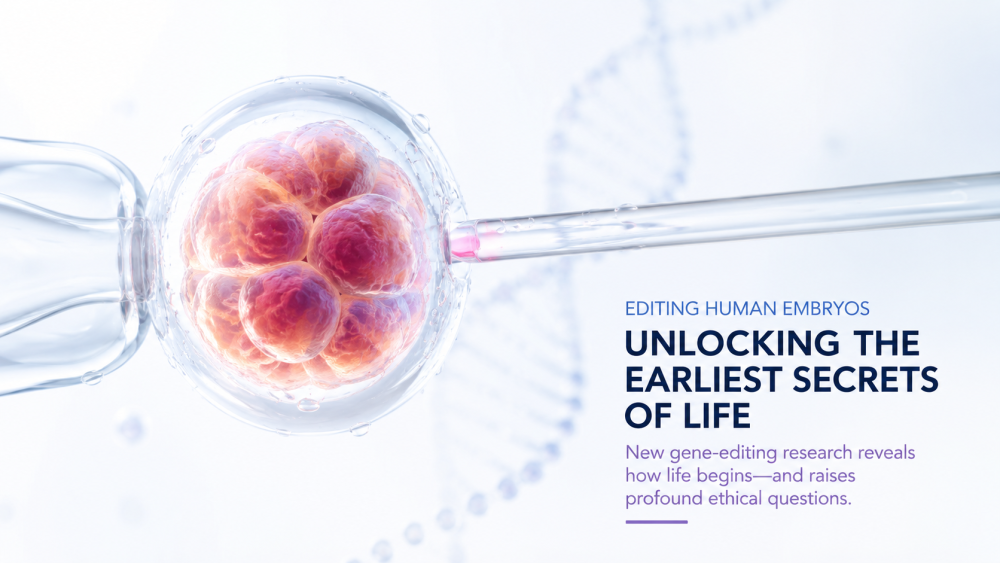
42/2026
According to an article published in Nature Journal, "Ethical discussions are urgently needed as genome-editing science advances, some researchers say." Let's explore this issue in more detail:
For centuries, one of biology's greatest mysteries has been remarkably simple: how does a single fertilized egg develop into a complete human being?
Scientists have now taken an important step toward answering that question. Using an advanced form of gene editing known as base editing, researchers have precisely altered specific genes in human embryos to observe how those genes guide the earliest stages of development. Rather than attempting to create genetically modified babies, the embryos were studied only for research purposes and were never intended for implantation.
The research offers an unprecedented window into the first few days of human life, a period long hidden because it is extremely difficult to study directly. Researchers identified genes that appear to act as "master switches," directing cells to divide, specialize, and organize into tissues that eventually form the human body. Understanding these processes could help explain why many pregnancies fail naturally in the earliest stages and why some couples experience infertility or recurrent miscarriage.
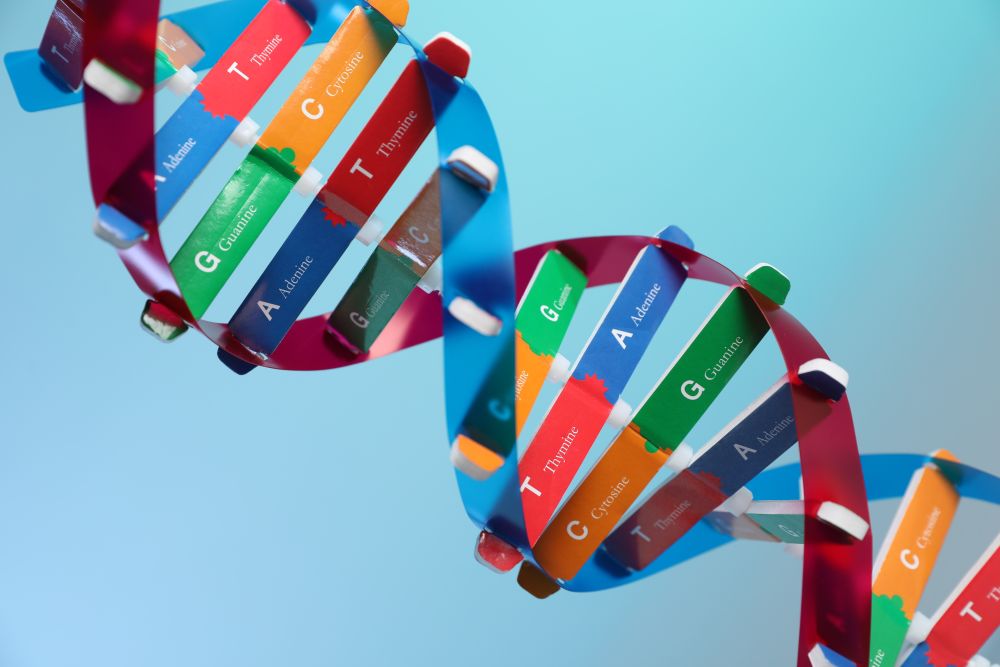
The technology behind this breakthrough is base editing, a refined version of the CRISPR gene-editing system. Unlike conventional CRISPR, which cuts DNA, base editing changes a single DNA letter without breaking the DNA strand. This makes the process considerably more precise and reduces the risk of unintended genetic changes. The study marks one of the first demonstrations of this highly accurate technique being used to investigate human embryonic development.
Potential medical benefits are substantial. By identifying which genes are essential for healthy embryonic development, scientists may eventually improve fertility treatments, deepen understanding of congenital disorders, and determine why some embryos fail to develop despite appearing normal under the microscope. Such knowledge could ultimately lead to healthier pregnancies and more effective reproductive medicine.
Yet the same technology also revives one of modern science's most challenging ethical debates.
Many experts emphasize the clear distinction between using gene editing to understand biology and using it to alter the genetic makeup of future generations. The current experiments were conducted under strict regulatory oversight, with embryos cultured only briefly and never used for reproduction. Even so, the ability to edit human embryos inevitably raises concerns about where society should draw the line.
Scientists warn that the technology is not ready for clinical use to create genetically edited children. Although base editing is more accurate than earlier methods, it can still produce unintended changes, and the long-term consequences of editing embryos remain unknown. Most researchers, therefore, argue that any move toward reproductive applications would be premature and ethically unacceptable at this time.
The broader lesson is that scientific progress and ethical responsibility must advance together. Every improvement in our ability to rewrite DNA increases our responsibility to decide when, why, and whether to use such interventions.
Human embryo research reveals some of biology's deepest secrets, offering hope for treating infertility and developmental disorders. But it also reminds us that the greatest challenge is not simply mastering technology; it is ensuring that humanity uses it with wisdom, transparency, and respect for ethical boundaries.