Tanycytes and Alzheimer’s: How These Brain Cells May Help Clear Toxic Proteins
Posted 6 months ago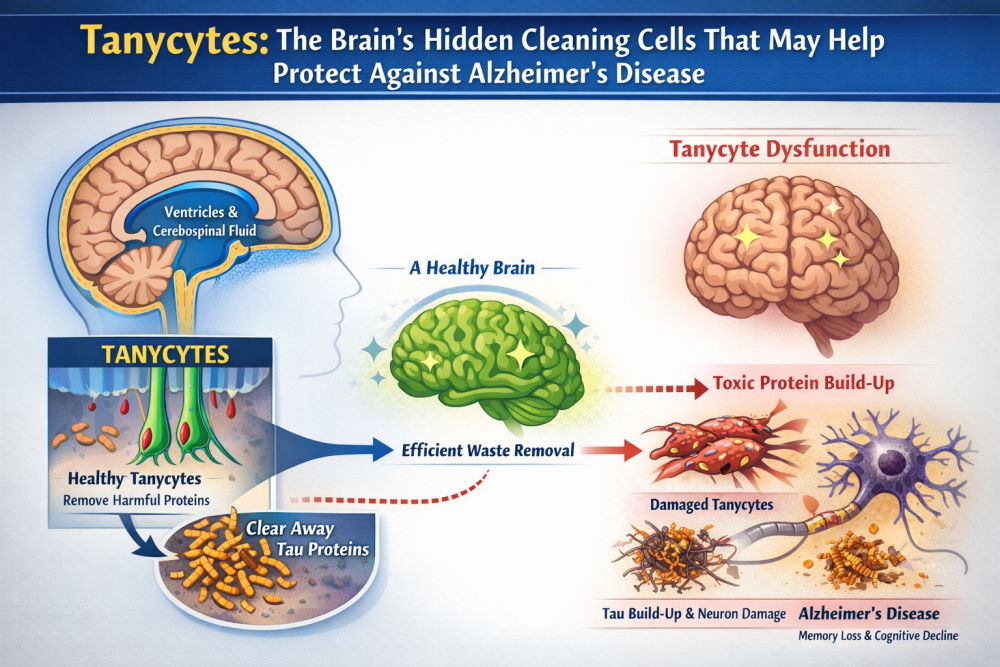
16/2026
Alzheimer’s disease is one of the most feared neurological disorders today. Scientists have long sought the biological mechanisms that cause this devastating disease. Now, a discovery is shedding light on a previously overlooked part of the brain that could play a key role in protecting us from Alzheimer’s.
Recent research shows that specialized brain cells called tanycytes help clear harmful proteins from the brain. When these cells malfunction, toxic proteins, especially tau proteins, can accumulate, a key feature of Alzheimer’s disease.
This discovery highlights a promising new direction for research and potential treatments, inspiring hope for those affected by Alzheimer's.
Understanding Alzheimer’s Disease
Alzheimer’s disease is the leading cause of dementia. It impacts memory, reasoning, and behavior, typically advancing gradually over several years. In the brain of someone with Alzheimer’s, abnormal proteins accumulate and interfere with communication between nerve cells. Over time, these neurons die, resulting in cognitive decline.
Two proteins are especially associated with the disease:
• Amyloid-beta, which forms plaques between brain cells
• Tau, which forms tangles inside neurons
Scientists have studied these proteins for decades, but many questions remain about how they accumulate and how the brain normally clears them.
Research suggests that the answer to how the brain clears harmful proteins may lie in a group of little-known brain cells called tanycytes, highlighting their potential importance in Alzheimer's protection.
Brain’s Hidden Clean-Up Crew
The brain has billions of neurons communicating through complex networks. But like any city, it also requires a waste management system to eliminate harmful substances.
This is where tanycytes come into play.
Tanycytes are specialized cells located near the brain’s ventricles, fluid-filled spaces that contain cerebrospinal fluid. For years, scientists believed these cells primarily transported substances between the brain and the bloodstream.
Now, researchers have identified another crucial role: they help remove harmful proteins from the brain.
In simple terms, tanycytes act like microscopic cleaning workers. They pick up waste molecules, such as tau proteins, and transport them out of the brain, preventing harmful accumulation.
When the System Breaks Down
The new research indicates that when tanycytes malfunction, the brain’s cleaning system starts to break down.
Instead of being removed, tau proteins begin to accumulate within brain tissue. Over time, these toxic buildups damage neurons and disrupt normal brain function, one of the hallmark features of Alzheimer’s disease.
This finding is important because it suggests that Alzheimer’s might not only be caused by harmful proteins but also by the failure of the brain’s natural waste-removal system.
In other words, the disease may partially stem from a failure in the brain’s housekeeping process.
Why This Discovery Matters
This new understanding has several important implications.
1. A New Target for Alzheimer’s Treatment
Most existing treatments for Alzheimer’s target reducing amyloid or tau proteins directly, but strengthening the brain’s natural cleaning system via tanycytes could offer a new, more effective approach.
If scientists can find ways to improve or repair tanycyte function, it could help slow down or prevent the buildup of toxic proteins.
2. Earlier Detection of Disease
Understanding how tanycytes function may also help researchers develop methods to detect Alzheimer’s earlier, potentially allowing diagnosis years before symptoms appear.
If scientists can detect early signs of these cells failing, it could enable doctors to diagnose Alzheimer’s years before symptoms develop.
Early detection is crucial, giving hope that future advancements could enable doctors to diagnose Alzheimer's before symptoms appear, empowering patients and families.
3. A Broader Understanding of Brain Health
This research emphasizes that supporting cells, once overlooked, are vital to brain health, encouraging curiosity and a sense of importance about ongoing studies.
For decades, neuroscience mainly focused on neurons. But modern research increasingly demonstrates that supporting cells, immune cells, and transport cells are just as vital in maintaining proper brain function.
Promising Future of Alzheimer’s Research
Although the discovery is exciting, scientists caution that more research is needed before it leads to new treatments.
Researchers still need to answer several key questions:
• Why do tanycytes stop working in Alzheimer’s patients?
• Can their function be restored or enhanced?
• Could drugs or lifestyle factors help support these cells?
Answering these questions could open entirely new strategies for preventing or treating neurodegenerative diseases.
Alzheimer’s disease currently impacts tens of millions of people worldwide, and the numbers are expected to grow as populations age. The emotional and financial burden on families and healthcare systems is significant.
Yet discoveries like this offer hope.
By revealing hidden biological processes inside the brain, scientists are gradually gaining a clearer understanding of how Alzheimer’s develops and how it might one day be halted.
The discovery of tanycytes’ role in clearing harmful proteins reminds us that the brain still hides many secrets. And with each new finding, humanity gets closer to understanding and ultimately defeating this devastating disease.
Disclaimer:
The contents provided on www.biomedglobal.org are intended for general informational and educational purposes only. This website's information, articles, and resources are based on data and findings from scientific publications, publicly available research, and reputable sources.
While every effort is made to ensure accuracy and reliability, Biomed Global does not guarantee, endorse, or assume responsibility for the completeness, timeliness, or validity of the information.