Shamonda Virus: A New Human Infection Tests Modern Medicine
Posted 13 hours ago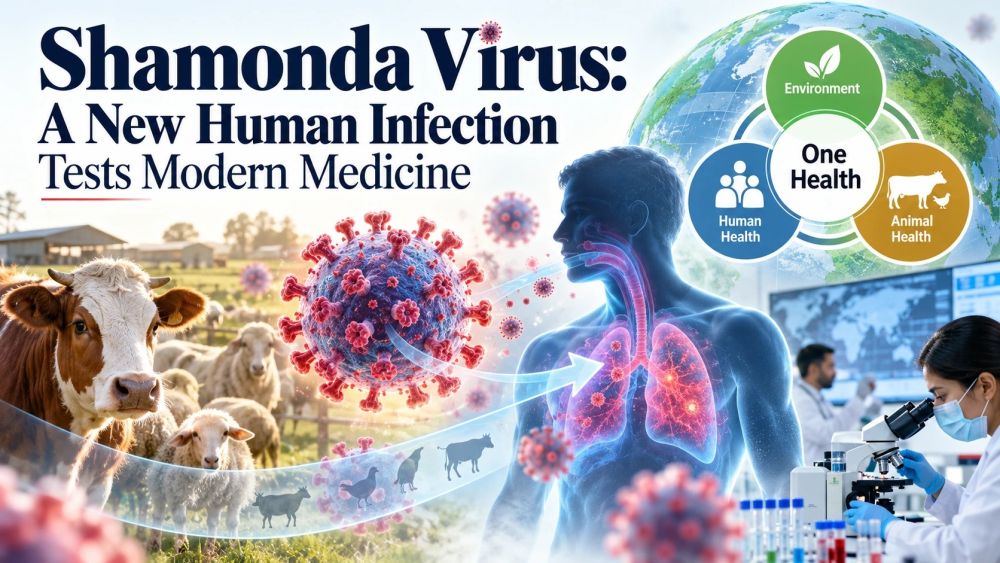
68/2026
The first confirmed human infection in the Rhône-Alpes area with the Shamonda virus reminds us of a truth modern medicine sometimes struggles to convey: a new infection in a person does not automatically signal the start of a pandemic. But we shouldn't dismiss it as mere curiosity.
According to Nature Journal, researchers have identified a human infection with the Shamonda virus, a pathogen associated with livestock. Scientists currently consider the risk of transmission between people to be low. That assessment matters. So does the need to understand how an animal-associated virus reaches a human host, what conditions make such infections possible, and whether the virus could evolve in ways that alter its public-health significance.
The appropriate response is neither panic nor complacency. It is disciplined scientific vigilance.
The boundary between animal and human health is disappearing.
According to world-recognized virologist Professor Emeritus Dr. Muhammad Mukhtar, Rector of the University of Southern Punjab in Multan, Pakistan, viruses do not respect administrative boundaries that separate hospitals, farms, laboratories, and wildlife habitats. Human activity increasingly connects these environments through livestock production, land-use changes, international travel, and expanding contact between people and animals.
Most animal-associated pathogens never become sustained human threats. Some, however, cross the species barrier, and even fewer can spread efficiently among people. Distinguishing among these possibilities requires careful surveillance, reliable laboratory testing, and transparent communication.
The lesson from past outbreaks is not that every unfamiliar virus will become a global emergency. Waiting for widespread illness before investing in research can leave public health authorities dangerously unprepared.
Preparedness is more than responding to an emergency.
This is the logic of the One Health approach, which recognizes that human health, animal health, and the environment are inseparable. It calls for veterinarians, physicians, epidemiologists, environmental scientists, and public health authorities to work as parts of a coordinated system rather than as isolated institutions.
For countries with substantial agricultural economies, including Pakistan, this approach warrants particular attention. Close contact between people and livestock makes veterinary surveillance, accessible diagnostic services, and communication between rural health facilities and reference laboratories essential to national health security.
Universities can contribute by training interdisciplinary researchers, strengthening laboratory capacity, and translating scientific findings into practical guidance for communities.
Trust is part of the infrastructure.
Scientific evidence alone cannot control an outbreak. People must understand why surveillance matters, when they need medical attention, and how to distinguish credible warnings from speculation.
Authorities should explain what is known, what remains uncertain, and what evidence would change the current risk assessment. Overstating a threat can undermine trust; withholding information can do the same.
The discovery of the Shamonda virus in a human should therefore be treated as an opportunity to improve preparedness, not as a basis for sensational predictions.
The world cannot prevent every pathogen from crossing into humans. It can, however, become much better at detecting such events, investigating them quickly, and responding proportionately. Public-health leadership is measured not by how dramatically it reacts to a crisis, but by how much suffering it prevents before a crisis begins.