HEC Chairman Joins NSU’s Mission for a Hepatitis-Free Pakistan; Founding Vice Chancellor Commends University Leadership
Posted 14 hours ago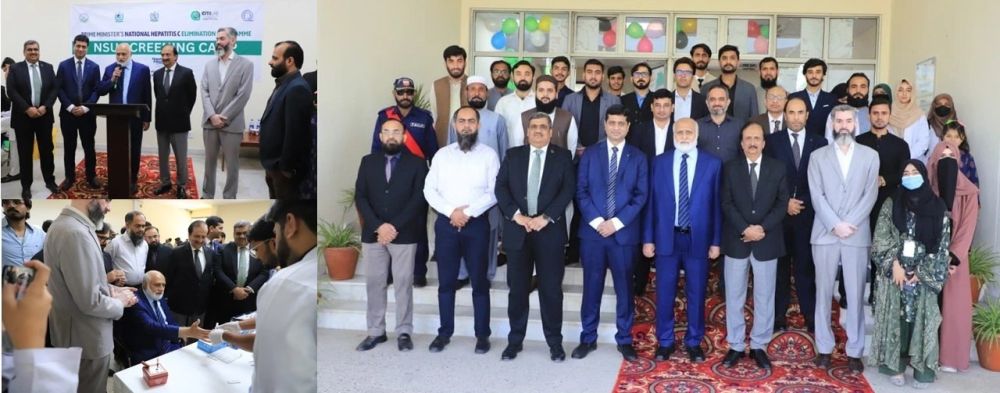
69/2026
The National Skills University Islamabad (NSU), Pakistan, organized a screening camp under the Prime Minister’s National Hepatitis C Elimination Program, bringing together higher education leadership, healthcare professionals, diagnostic partners, and students in a collective effort to advance the vision of a hepatitis-free Pakistan by 2030.
Prof. Dr. Niaz Ahmad Akhtar (S.I.), Chairman of the Higher Education Commission (HEC) Pakistan, served as the event's chief guest. He visited the screening camp and praised the university’s initiative to translate national public health priorities into meaningful institutional action.
During his visit, the HEC Chairman met with the Executive Director of QJ Diagnostic Laboratory, Mr. Zubair Nasir, and the Director of City Lab, Dr. Jamal Nasir, whose organizations contribute to implementing the national program. He particularly appreciated the efforts of Prof. Dr. M. Arif Nadeem Saqib, Chairperson of the Department of Health Sciences Technology at NSU, participating students, and the organizing team for their dedication to this important public health initiative.
The screening camp demonstrated that universities could extend their role beyond conventional teaching and research to become active partners in addressing national challenges. The collaboration among HEC, NSU, QJ Diagnostic Laboratory, and City Lab underscores the importance of institutional partnerships in expanding access to preventive healthcare, early diagnosis, and timely treatment.
Pakistan faces one of the world's largest Hepatitis C burdens, with an estimated 10 million people living with the infection. According to the World Health Organization, the country records about 110,000 new infections each year, making large-scale screening, preventive awareness, and accessible treatment national priorities.
The Prime Minister’s National Hepatitis C Elimination Program, launched in May 2026 by the Ministry of National Health Services, Regulations and Coordination in collaboration with WHO, aims to screen more than 164 million people nationwide and eliminate Hepatitis C as a public health threat by 2030. The program provides free screening, diagnostic services, and treatment, supported by modern diagnostics, locally manufactured antiviral medicines, and a national electronic medical record system. Its domestically financed approach also offers an important model for other countries facing a comparable disease burden.
Founding Vice Chancellor Congratulates NSU Leadership
Extending his heartfelt congratulations on this important achievement, Prof. Emeritus Dr. Muhammad Mukhtar, the Founding Vice Chancellor of National Skills University Islamabad and currently serving as Rector of the University of Southern Punjab, Multan, Pakistan, congratulated Vice Chancellor Prof. Dr. Saud Altaf and Prof. Dr. M. Arif Nadeem Saqib, Chairperson of the Department of Health Sciences Technology, on successfully advancing the university's contribution to this national cause.
Prof. Dr. Mukhtar expressed satisfaction that NSU continues to demonstrate the institutional vision and commitment for which it was originally established. He remarked:
"As the Founding Vice Chancellor of National Skills University Islamabad, Pakistan, I feel immense pride and satisfaction seeing the university contribute to a national mission of such profound importance. I congratulate Prof. Dr. Saud Altaf, Vice Chancellor, NSU, and Prof. Dr. Arif Nadeem Saqib, Chairperson of Health Sciences Technology, and their dedicated team on this commendable initiative. I had the privilege of selecting and appointing these talented and committed individuals to serve this important university, and it is deeply gratifying to see them carrying forward its mission with such dedication, professionalism, and a strong sense of national responsibility."
He further observed that NSU's growing institutional recognition, including its association with UNESCO-UNEVOC as an International Center for Technical and Vocational Education and Training and recognition by the European Training Foundation as a Center of Vocational Excellence, reflects the value of building universities around capable leadership, committed faculty, and a clear national purpose.
He emphasized that the university's contribution to the Hepatitis C elimination campaign illustrates the wider responsibility of higher education institutions to connect knowledge with society's most pressing needs.
The HEC Chairman's participation further reinforced the message that Pakistan's higher education sector must actively support national development priorities. The initiative also opens avenues for similar screening and awareness campaigns across universities, potentially bringing millions of students, faculty members, and employees within the reach of preventive healthcare services.