Healing Before Birth: The Promise of Prenatal Stem Cell Therapy for Spina Bifida
Posted 6 months ago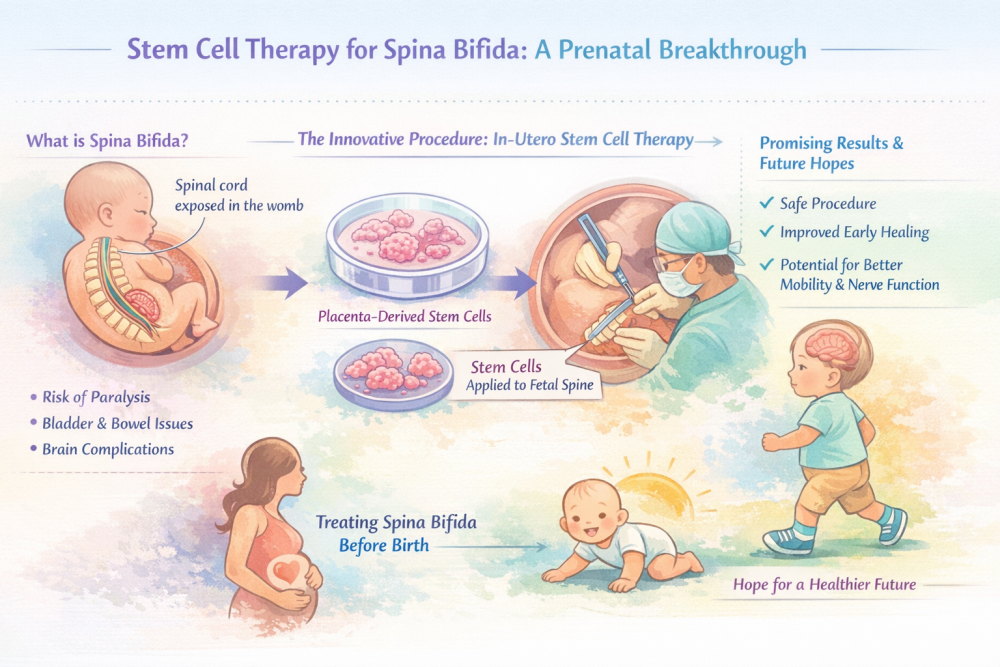
13/2026
In a significant breakthrough for prenatal medicine, scientists have successfully tested a groundbreaking stem-cell treatment that could revolutionize how we care for babies diagnosed with spina bifida before birth. This pioneering achievement represents a hopeful step in the effort to prevent lifelong disability from one of the most difficult congenital conditions.
Spina bifida is a congenital disability where a baby’s spinal cord doesn't develop properly in the womb. Traditionally, treatment occurs after birth, but even with surgery and intervention, many children face lifelong challenges, including issues with movement, bladder control, and other neurological problems.
What makes this research so exciting is that doctors applied placenta-derived stem cells directly to the exposed spinal cords of fetuses still in the womb. Still, it is important to consider potential risks, ethical considerations, and limitations of in-utero therapy. This approach aims to protect the developing spinal cord early, yet further studies are needed to understand the long-term safety and ethical implications fully.
👶 How the Treatment Worked
In the small trial, six pregnant women participated after their babies were diagnosed with spina bifida through prenatal screening. The researchers carefully applied regenerative cells derived from the placenta onto the fetus’s spinal cord while in the womb. The key takeaway is that the treatment was safe, which is essential for building confidence in further research and potential clinical use.
🧠 Why This Matters
This research is groundbreaking because it shifts the focus from post-birth treatment to preventive prenatal therapy. If further studies confirm that this approach can reduce the risk of lifelong disabilities, it could greatly improve outcomes for affected children and families worldwide.
Researchers have long aspired to treat congenital conditions as early as possible. This study suggests that, with advances in stem-cell science and prenatal care, that dream is beginning to come true.
📍 What’s Next?
Although the research is still in its early stages, the promising safety results from this first-in-human trial provide a strong foundation for further studies to explore whether this therapy can truly improve long-term neurological and functional outcomes for children born with spina bifida.
Translating a breakthrough from the laboratory to routine clinical practice is often a slow and meticulous process. However, this pioneering work marks a significant and hopeful step toward redefining how congenital disorders may be treated — not after birth, but at the earliest stages of human development.
Image Created by ChatGPT5.2 Version
Disclaimer:
The contents provided on www.biomedglobal.org are intended for general informational and educational purposes only. This website's information, articles, and resources are based on data and findings from scientific publications, publicly available research, and reputable sources.
While every effort is made to ensure accuracy and reliability, Biomed Global does not guarantee, endorse, or assume responsibility for the completeness, timeliness, or validity of the information.