Ecosystem Services and Human Health: Foundations, Functions, and Future Directions
Posted 5 months ago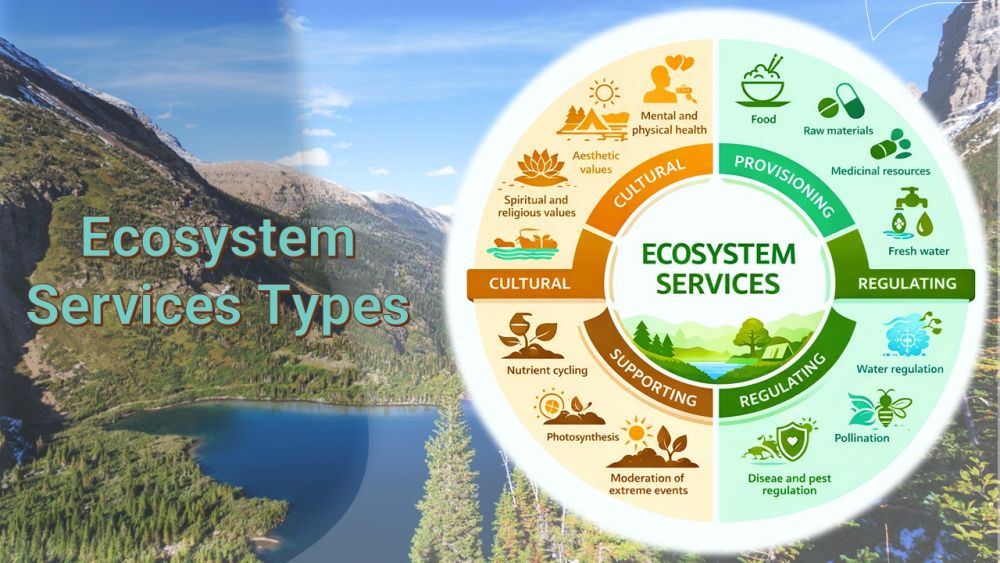
EH-10
1. Background: Ecosystem Services
In contemporary debate on environmental science and public health, increasing attention is being directed toward the fundamental yet often overlooked role of nature as an invisible life-support system. Human existence is intricately dependent on natural systems that continuously provide essential resources and regulatory functions. From the air we breathe to the water we drink and the food we eat, nature sustains life in ways that are both profound and indispensable.
These benefits, collectively known as ecosystem services, encompass the direct and indirect contributions of ecosystems to human well-being. They are not merely environmental assets but foundational determinants of survival, health, and quality of life. Despite their significance, ecosystem services are often taken for granted because their processes operate seamlessly in the background of human activity.
2. Conceptualizing Ecosystem Services
Ecosystem services are the direct and indirect benefits that natural ecosystems provide to human populations. These services impact the critical aspects of human life, ranging from physiological needs to psychological well-being.
From a human health perspective, ecosystem services operate across multiple dimensions:
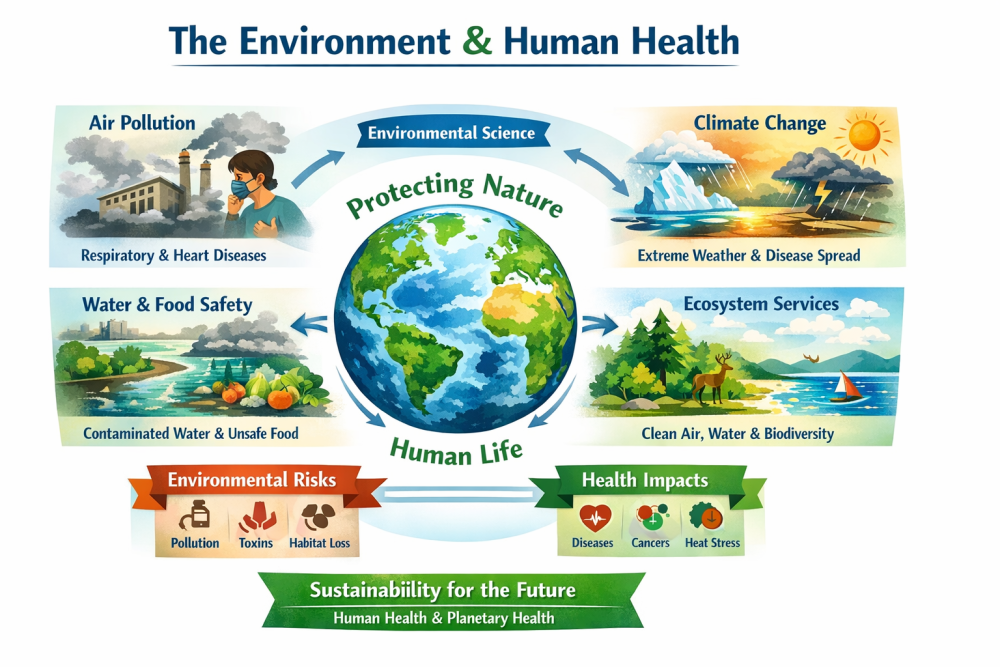
- Preventive Health: Natural systems such as forests and wetlands improve air and water quality, thereby reducing the prevalence of respiratory and waterborne diseases.
- Nutritional Health: Biodiversity ensures a diverse and resilient food supply, essential for balanced nutrition and food security.
- Mental Health: Interaction with natural environments has been shown to reduce stress, enhance cognitive function, and promote emotional well-being.
- Disease Regulation: Healthy ecosystems regulate vectors and pathogens, minimizing the spread of infectious diseases.
However, the degradation of these services has led to a noticeable rise in public health challenges, including air pollution-related illnesses, emerging infectious diseases, and nutritional insecurity. This underscores the inseparable link between ecosystem integrity and human health outcomes.
3. Classification of Ecosystem Services
To better understand their functions, ecosystem services are broadly categorized into four major types. These categories, while distinct in description, are deeply interconnected in practice.
3.1 Provisioning Services
Provisioning services are the most tangible outputs of ecosystems. These include food, freshwater, timber, and medicinal resources. From a public health perspective, these services are fundamental to sustaining life by ensuring adequate nutrition, hydration, and access to therapeutic compounds.
3.2 Regulating Services
Regulating services are the natural processes that maintain environmental stability. These include climate regulation, flood control, air purification, and pollination. These services serve as nature’s protective mechanisms, mitigating environmental risks and reducing vulnerability to natural disasters and disease outbreaks.
3.3 Cultural Services
Cultural services encompass the non-material benefits derived from ecosystems, such as recreation, tourism, spiritual enrichment, and aesthetic appreciation. These services play a vital role in promoting mental health, fostering social cohesion, and enhancing quality of life. Growing empirical evidence supports a positive relationship between exposure to natural environments and reduced psychological stress.
3.4 Supporting Services
Supporting services form the ecological foundation on which all other services depend. Processes such as nutrient cycling, soil formation, and primary production sustain ecosystem function. Without these underlying mechanisms, the sustainability of all other ecosystem services would be compromised.
4. Interconnectedness and System Dynamics
A critical aspect of ecosystem services is their interdependence. These categories do not operate in isolation; rather, they are components of a complex, dynamic system. Disruptions in one category can trigger cascading effects across others.
For example, degradation of supporting services, such as soil fertility, can affect provisioning services, such as food production, which in turn impacts nutritional health. Similarly, impaired regulating services, such as water purification, can increase the disease burden.
Understanding this interconnectedness is essential to developing integrated strategies for environmental management and public health policy.
5. Economic and Societal Value of Ecosystem Services
Ecosystem services hold immense economic value, often estimated at trillions of dollars annually. Beyond their monetary value, they are critical to sustaining food security, clean water, climate stability, and disaster risk reduction.
Real-world examples illustrate their importance:
- Wetlands provide flood protection and water purification.
- Forests regulate climate and improve air quality through carbon sequestration.
- Pollinators, such as bees, are essential for agricultural productivity and food systems.
These examples highlight the integral role ecosystem services play in supporting economies, livelihoods, and societal stability.
6. Threats to Ecosystem Services
Despite their importance, ecosystem services are increasingly threatened by human activities. Key drivers of degradation include:
- Deforestation
- Climate change
- Pollution
- Biodiversity loss
The decline of ecosystem services has far-reaching implications for environmental sustainability, human health, and socioeconomic development. The erosion of these services exacerbates vulnerabilities and undermines resilience in both natural and human systems.
7. Conservation and Sustainable Management
Given the critical role of ecosystem services, conservation is no longer optional; it is imperative. Effective strategies must focus on:
- Maintaining ecological balance
- Ensuring sustainable resource utilization
- Protecting the interests of future generations
The way forward includes:
- Adoption of sustainable development policies
- Restoration of degraded ecosystems, such as forests and wetlands
- Enhancing public awareness of the value of ecosystem services
Such measures are essential to preserving ecosystem integrity and ensuring long-term sustainability.
8. Ecosystem Services as a Public Health Imperative
The relationship between ecosystem services and human health is both direct and profound. Environmental degradation leads to increased disease burden, reduced quality of life, and heightened vulnerability to global health challenges.
Therefore, ecosystem conservation must be recognized as a core component of public health strategy. Integrating ecological considerations into health policy can yield more holistic and sustainable outcomes.
9. Conclusion: A Call to Responsibility
The study of ecosystem services ultimately leads to a compelling realization: human beings are not separate from nature but are an intrinsic part of it. Protecting ecosystem services is, therefore, synonymous with protecting human life itself.
This is not merely an environmental concern; it is a collective responsibility that encompasses policy, research, and individual action. Every decision made today has the potential to either degrade or sustain the natural systems on which future generations depend.
In conclusion, safeguarding ecosystem services is essential to sustaining life, strengthening economies, preserving environmental integrity, and securing the well-being of present and future generations.
Let us commit to valuing and protecting nature, for our future depends upon it.