The Many Colors of Biotechnology and Their Role in Human Well Being
Posted 4 months ago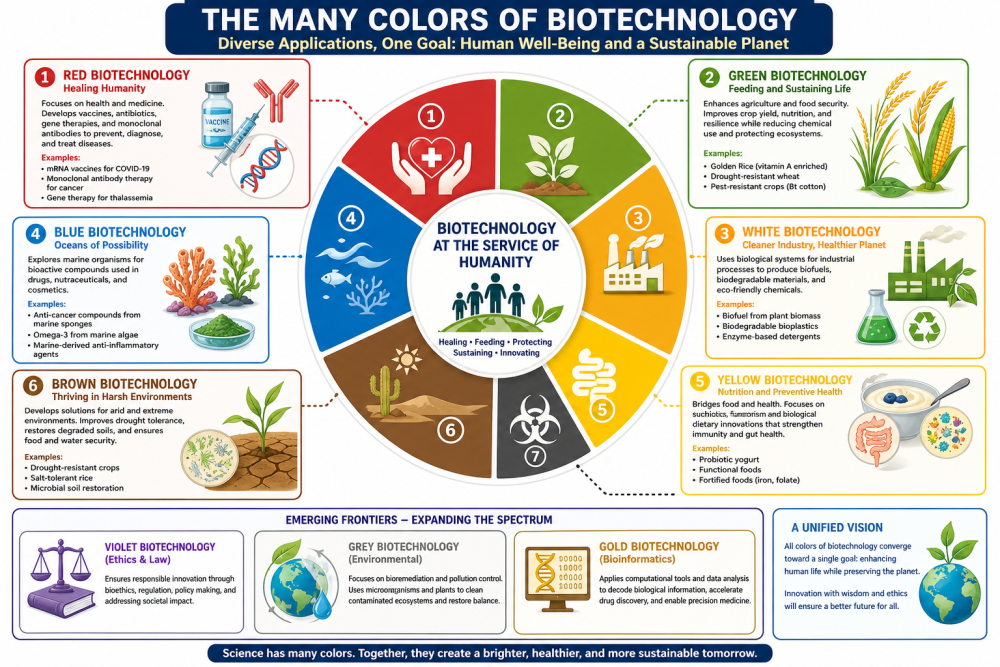
23/2026
Biotechnology is no longer confined to scientific laboratories; it’s part of our everyday lives. It helps create vaccines that protect babies, medicines that treat diseases, and crops that provide the food we eat. In many ways, it quietly supports how we live and stay healthy.
What makes biotechnology especially interesting is the breadth of its applications. Scientists often describe it in different “colors,” each representing a field such as health, agriculture, or the environment. Although these areas differ, they all work together toward one goal: improving human life.
1. Red Biotechnology: Healing Humanity
Red biotechnology is at the heart of modern medicine. It focuses on diagnosing, treating, and preventing disease using biological tools.
Consider the rapid development of vaccines during the COVID-19 pandemic. Within a remarkably short time, messenger ribonucleic acid (mRNA)-based vaccines were designed, tested, and deployed worldwide, saving millions of lives. This would not have been possible without decades of foundational research in molecular biology and immunology.
Another example is the use of monoclonal antibody therapies to treat cancers such as leukemia. These therapies target cancer cells, minimizing damage to healthy tissues—a major leap from traditional chemotherapy.
Gene therapy offers perhaps the most transformative promise. Diseases such as thalassemia and certain inherited immune deficiencies are now being treated by correcting faulty genes at their source. Red biotechnology, therefore, does not merely treat illness; it redefines what it means to cure.
2. Green Biotechnology: Feeding and Sustaining Life
Human health begins long before a patient enters a hospital; it begins in the field.
Green biotechnology enhances agriculture by improving crop yield, nutritional value, and resistance to pests and environmental stress. A well-known example is Golden Rice, developed to combat vitamin A deficiency, a condition responsible for blindness in children across parts of Asia and Africa.
Similarly, drought-resistant wheat and maize varieties are being developed for regions experiencing climate instability. In countries like Pakistan, where water scarcity is becoming critical, these innovations can determine food security for millions.
By reducing the need for chemical pesticides and fertilizers, green biotechnology also protects ecosystems, assuring that human nutrition does not come at the expense of environmental degradation.
3. White Biotechnology: Cleaner Industry, Healthier Planet
White biotechnology, often called industrial biotechnology, replaces conventional chemical processes with biological ones.
Consider biofuels. Rather than relying solely on fossil fuels, scientists are engineering microorganisms to produce ethanol and biodiesel from plant waste. This approach reduces greenhouse gas emissions and dependence on non-renewable resources.
Another example is biodegradable plastics produced through bacterial fermentation. These materials break down naturally, reducing pollution in oceans and landfills.
Even everyday products like detergents now use enzymes to clean clothes at lower temperatures, saving energy and reducing environmental impact. The result is a cleaner environment, which directly translates into fewer respiratory diseases, safer drinking water, and better public health.
4. Blue Biotechnology: Oceans of Possibility
Oceans cover more than 70% of Earth’s surface, yet remain largely unexplored. Blue biotechnology taps into this vast reservoir of life.
One notable example is the discovery of anticancer compounds from marine sponges. These organisms produce unique chemicals to survive in competitive environments, chemicals that have been adapted into life-saving drugs.
Marine algae are another valuable resource. Rich in nutrients and bioactive compounds, they are used in dietary supplements and functional foods to support cardiovascular and immune health.
Even coral ecosystems are being studied for molecules that could treat inflammation and infectious diseases. The ocean, in essence, is not just a body of water; it is a pharmacy waiting to be explored.
5. Yellow Biotechnology: Nutrition as Medicine
As medicine evolves, the focus is shifting from treatment to prevention, and yellow biotechnology sits at the intersection of food and health.
Probiotics found in yogurt and fermented foods help maintain a healthy gut microbiome, which is increasingly linked to immunity, mental health, and the prevention of chronic diseases.
Functional foods such as omega-3-enriched products or fortified cereals go beyond basic nutrition to actively improve health outcomes. For example, fortified flour programs in many countries have significantly reduced iron deficiency anemia.
Yellow biotechnology empowers individuals to take control of their health through diet, making prevention both accessible and sustainable.
6. Brown Biotechnology: Thriving in Harsh Environments
Brown biotechnology focuses on survival in extreme environments, especially deserts and arid regions.
In regions where water scarcity and soil salinity pose serious challenges, scientists are developing crops that can thrive in harsh conditions. Salt-tolerant rice and heat-resistant wheat are examples of innovations that directly support vulnerable populations.
Additionally, microbial solutions are being used to restore degraded soils, making barren land productive again. Brown biotechnology ensures that even the most inhospitable environments can support life.
7. Dark Biotechnology: A Cautionary Frontier
Not all applications of biotechnology benefit humanity.
Dark biotechnology refers to its misuse, particularly in developing biological weapons and bioterrorism. Lessons from history, including concerns raised after events such as the 2001 anthrax attacks, highlight the potential dangers.
This domain serves as a reminder that scientific power must be guided by ethical responsibility, strict regulation, and global cooperation. Without these safeguards, the same tools that cure diseases could be turned into instruments of harm.
8. Emerging Frontiers: Expanding the Spectrum
Biotechnology continues to evolve, giving rise to new interdisciplinary domains:
- Violet Biotechnology (Ethics & Law): Addresses bioethics, policymaking, and societal implications. For example, debates over gene-editing technologies such as CRISPR fall within this domain.
- Grey Biotechnology (Environmental): Focuses on bioremediation, such as using bacteria to clean up oil spills or detoxify polluted water bodies.
- Gold Biotechnology (Bioinformatics): Uses computational tools to analyze biological data. Genome-sequencing projects and AI-driven drug discovery are prime examples.
These emerging fields highlight that biotechnology is no longer confined to laboratories; it intersects with law, data science, and environmental stewardship.
9. A Unified Vision for Human Well-Being
All these colors of biotechnology converge on a single, powerful goal: enhancing human life while preserving the planet.
They heal the sick, feed the hungry, protect the environment, and prepare humanity for future challenges. Yet their power demands wisdom. Scientific innovation without ethical responsibility is incomplete.
Biotechnology, therefore, is more than a discipline; it is a commitment, a commitment to survival, to dignity, and to progress.