Synthetic Viruses, Designed by AI: Promise, Peril and the Future of Medicine
Posted 1 month ago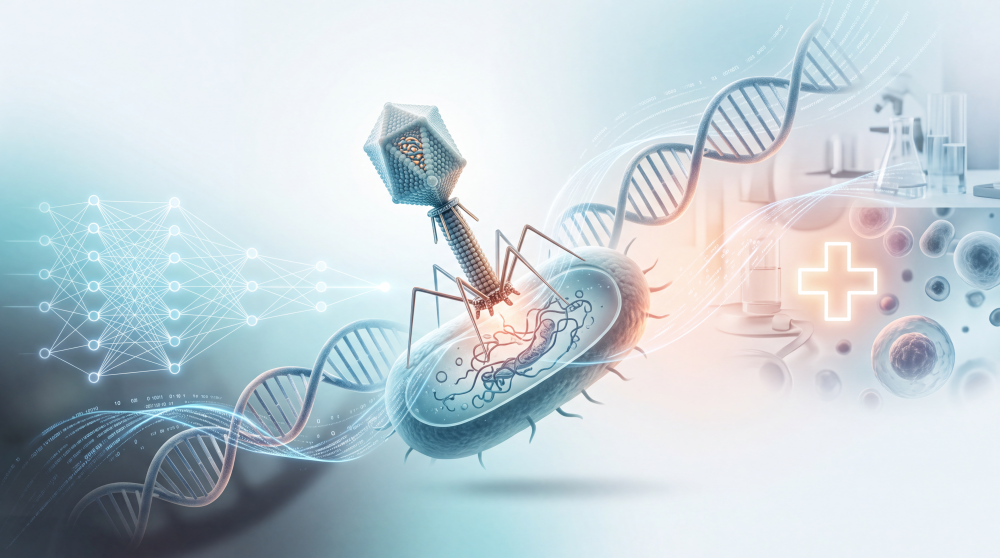
50/2026
A study published in the ScienceNews is both intriguing and alarming for humanity. Researchers used genome-language models Evo 1 and Evo 2 to generate complete bacteriophage genomes, which are viruses that infect bacteria rather than humans. The researchers then synthesized selected designs and tested whether the computer-generated genomes could come to life.
The result is a remarkable proof of principle: 16 AI-designed bacteriophages proved viable.
The work marks an important step beyond designing individual proteins or genes. The AI was asked to write an entire genetic instruction manual for a virus capable of functioning within a living system.
A virus as a biological machine
To understand the significance, it helps to think of a genome as a language.
Just as a sentence consists of words arranged according to rules, DNA consists of four chemical letters, A, C, G, and T, arranged in patterns that encode proteins and regulate biological processes. Genome-language models attempt to learn these patterns from enormous collections of DNA sequences.
The researchers used the small bacteriophage ΦX174 as their starting point. It is a particularly useful experimental system because it has been extensively studied and infects E. coli rather than people. The AI models generated approximately 300 candidate phage genomes, which were then tested experimentally. Sixteen produced functional viruses capable of infecting E. coli. Notably, the researchers did not simply ask AI to find an existing virus in a database. They used it to generate new genetic sequences that had not existed in precisely that form in nature, and then demonstrated that some of those sequences could function.
One of the most intriguing findings came from structural analysis. Cryo-electron microscopy showed that one AI-designed phage contained a DNA-packaging protein that was evolutionarily distant from the corresponding protein in the original phage. Several of the new phages also showed stronger growth or faster bacterial killing than ΦX174 under the experimental conditions.
An intriguing possibility for antibiotic resistance
The potential medical importance becomes clearer when viewed in the context of the global problem of antimicrobial resistance.
Bacteria evolve. Antibiotics that once worked reliably can gradually lose their effectiveness. Bacteriophages offer a different strategy: rather than chemically attacking bacteria, they infect and destroy bacterial cells. The challenge is that bacteria can also evolve resistance to phages. Here, AI could be useful. Instead of searching nature for a phage that happens to attack a particular bacterium, researchers could eventually use computational models to design phages with desired characteristics.
In the study reported, a cocktail of AI-designed phages overcame resistance in three E. coli strains that were resistant to the original ΦX174 phage. That finding does not demonstrate human treatment, but it provides an intriguing proof of concept for designing phages to target rapidly changing bacterial populations. The vision is compelling: if bacteria evolve resistance, scientists might one day redesign therapeutic phages almost as rapidly as bacteria do.
Seeing the Invention with a Promising Positive Lens
1. AI can explore biological possibilities beyond conventional trial and error
Nature has generated an enormous diversity of genomes, but scientists can examine only a fraction of them. AI models may be able to explore genetic combinations that researchers would never consider constructing manually.
2. The approach works at the whole-genome level
Much of today's AI-assisted biology focuses on individual proteins, genes, or regulatory elements. This research demonstrates something more ambitious: the computational generation of complete viral genomes that can function experimentally.
3. It could accelerate phage therapy
The ability to generate new bacteriophages could eventually help researchers respond to bacteria that develop resistance to existing phages. The study's resistance experiments offer an early indication of this potential.
Delimitation and Further Deliberation on the Study
But there are important reasons for caution
The excitement surrounding this study should not obscure its limitations.
1. Only a small fraction of designs worked
Approximately 300 candidate genomes were tested, but only 16 produced viable phages. That is an impressive demonstration of feasibility, but it also shows that AI does not yet possess anything resembling a reliable "biological printer." Most designs failed.
2. This was a very simple biological system
ΦX174 is a small bacteriophage with a compact genome. Designing a functional bacteriophage is fundamentally different from designing a bacterium, an animal virus, or another complex organism.
Consequently, it would be misleading to conclude that AI can now "create life from scratch."
The researchers themselves describe the work as a foundation for future genome-scale design rather than as a demonstration that complex organisms can be generated automatically.
3. The therapeutic promise remains hypothetical
The experiments were conducted against E. coli in laboratory settings. They do not demonstrate that these pages are safe or effective treatments for humans. Before AI-designed phages could become medicines, researchers would need to establish their specificity, stability, pharmacology, immune effects, safety and clinical effectiveness through extensive testing.
The uncomfortable question: Could the same technology be misused?
Perhaps the most consequential aspect of the paper has little to do with E. coli.
The same principle that allows AI to generate useful biological systems could, as the technology develops, be applied to systems that pose much greater risks. The researchers deliberately excluded sequences from viruses that infect humans, animals, and plants from the relevant training data. The work therefore does not demonstrate that AI can design a human pathogen. Nor should the study be casually described as creating a dangerous human virus. But it establishes something important nonetheless: AI can now directly participate in the generation of functional viral genomes.
That changes the biosecurity conversation.
The concern is not that today's system can immediately generate a pandemic virus. Rather, it is that capabilities may advance faster than the rules, screening systems, and institutional safeguards designed to control them. This is why experts have called for a layered approach that includes responsible AI development, oversight of biological research, DNA synthesis screening, and conventional laboratory biosafety and biosecurity measures.
The real breakthrough is not the virus.
It is tempting to describe the study as "AI creating a virus." That makes for a dramatic headline, but it misses the deeper scientific story.
The more important breakthrough is that a machine-learning model was able to infer enough of the rules of a biological system to propose new genome-scale designs, and some of those designs worked when converted from digital information into biological matter.
That is a profound transition.
For most of the history of molecular biology, computers have helped scientists read the book of life.
Now, increasingly, they are learning to write sentences in it.
The immediate application may be modest: better bacteriophages for combating bacterial infections. But the underlying technology could eventually influence synthetic biology, biotechnology, drug discovery, and the engineering of living systems.
That promise comes with an equally important responsibility.
The findings of this study offer an encouraging glimpse of what AI might contribute to medicine and a timely reminder that, when artificial intelligence begins to write the language of life, scientific progress and biological responsibility must advance together.