Mehfooz Dawa: A Digital Shield Against Counterfeit Medicines and a New Milestone in Pakistan’s Healthcare Transformation
Posted 20 hours ago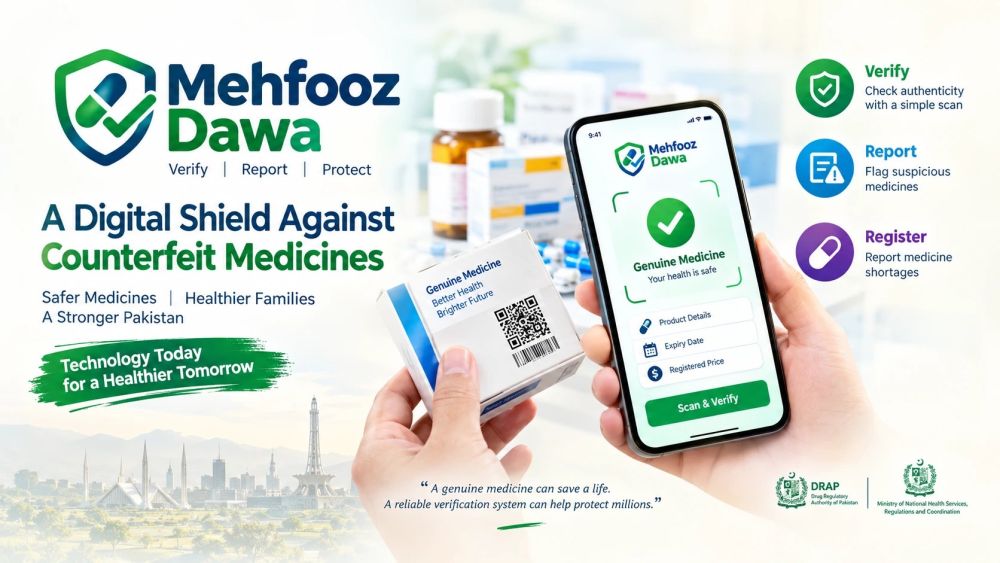
82/2026
The convergence of technology, transparency, and citizen empowerment protects public health and restores confidence in Pakistan’s pharmaceutical system.
Medicine safety extends beyond healthcare regulation to include human dignity, public trust, and the fundamental right to life. Each tablet, capsule, injection, or therapeutic product given to a patient carries an implicit assurance of authenticity, safety, efficacy, and adherence to quality standards. Compromising this assurance through counterfeit or substandard medicines can cause severe consequences.
Pakistan has taken an important step to address this longstanding public health challenge by launching Mehfooz Dawa, a digital medicine verification application inaugurated by the Prime Minister of Pakistan on November 26, 2026. Developed by the Ministry of National Health Services, Regulations and Coordination in collaboration with the Drug Regulatory Authority of Pakistan (DRAP), the initiative marks a significant step toward a more transparent, accountable, and technology-enabled healthcare system.
Mehfooz Dawa is positioned to serve as a digital safeguard, connecting pharmaceutical manufacturers, distributors, pharmacies, healthcare professionals, and citizens who rely on medicines to maintain their health and well-being.
Health Risks of Counterfeit Medicines
Counterfeit and substandard medicines pose a significant and often underestimated threat to public health. Medicines may appear authentic, have professional packaging, and be sold through seemingly legitimate outlets, yet still contain incorrect ingredients, insufficient therapeutic substances, or harmful contaminants.
Consequences include treatment failure, prolonged illness, serious complications, and preventable deaths. For patients with cardiovascular diseases, diabetes, cancer, and infections, reliable medicines are especially critical.
Putting Medicine Verification in Citizens’ Hands
A key feature of Mehfooz Dawa is its simplicity, turning complex pharmaceutical verification processes into an accessible digital service.
The application connects to DRAP’s national medicine database, which includes information on about 92,000 medicines from over 700 pharmaceutical companies. It enables consumers to scan the two-dimensional barcode on medicine packaging.
The application provides three important functions:
Medicine verification: Consumers can scan medicine barcodes to check products against the regulatory database and access relevant information, including registered prices and expiry details. Green and red visual indicators help users interpret verification results.
Complaint registration: Citizens can report suspicious medicines directly through the application, allowing regulatory authorities to investigate potentially counterfeit or unsafe products.
Medicine shortage reporting: Users can report shortages of essential medicines, helping authorities identify availability challenges that may seriously affect patients requiring continuous treatment.
Together, these features mark a shift from an institution-centered regulatory approach to a participatory model of public health protection.
Pharmaceutical regulation has traditionally relied on inspections, laboratory testing, licensing, documentation, and enforcement. While these remain indispensable, digital technologies can greatly enhance their effectiveness.
Digital barcoding and serialization provide an important technological foundation for product-level verification and improved supply-chain accountability.
However, digital verification will still need physical inspections, independent laboratory testing, good manufacturing practices, and strict regulatory enforcement. A successful barcode scan does not replace laboratory certification of a medicine’s quality.
Prof. Emeritus Dr. Muhammad Mukhtar, Rector of the University of Southern Punjab, Multan, Pakistan, warmly welcomed the app's launch. He described the initiative as a significant step toward protecting human lives through digital innovation, transparency, and citizen empowerment.
Prof. Mukhtar observed that access to safe, authentic, and affordable medicines is fundamental to human well-being. He emphasized that empowering citizens to verify medicines, report suspicious products, and identify shortages reflects a progressive approach to healthcare governance, in which technology serves society directly.
The launch of Mehfooz Dawa marks the beginning of a broader national transformation. Its success depends on effective implementation and widespread public participation.
First, a nationwide awareness campaign must educate citizens through television, radio, social media, educational institutions, hospitals, and pharmacies. Information must be available in Urdu and regional languages to encourage broader adoption.
Second, pharmaceutical manufacturers, importers, distributors, and pharmacies must comply with applicable barcoding, serialization, and traceability requirements.
Third, suspicious products identified through the application must prompt timely regulatory investigations, including appropriate sampling, laboratory testing, and enforcement.
Fourth, hospitals, medical colleges, pharmacies, and universities should promote medication verification as an essential element of responsible healthcare practices.
Finally, aggregated and securely protected data from verification and complaint reporting can help authorities identify geographic patterns of counterfeit products, monitor medicine shortages, and develop evidence-based regulatory policies.
Mehfooz Dawa represents a significant step in Pakistan’s efforts to modernize healthcare governance and strengthen pharmaceutical safety. Its true success will be measured not by the number of downloads or barcode scans, but by preventing counterfeit medicines from reaching patients, removing unsafe products from the market, resolving shortages, and protecting lives.