Life Glows, and Death Takes the Light Away – Science Proves it
Posted 4 months ago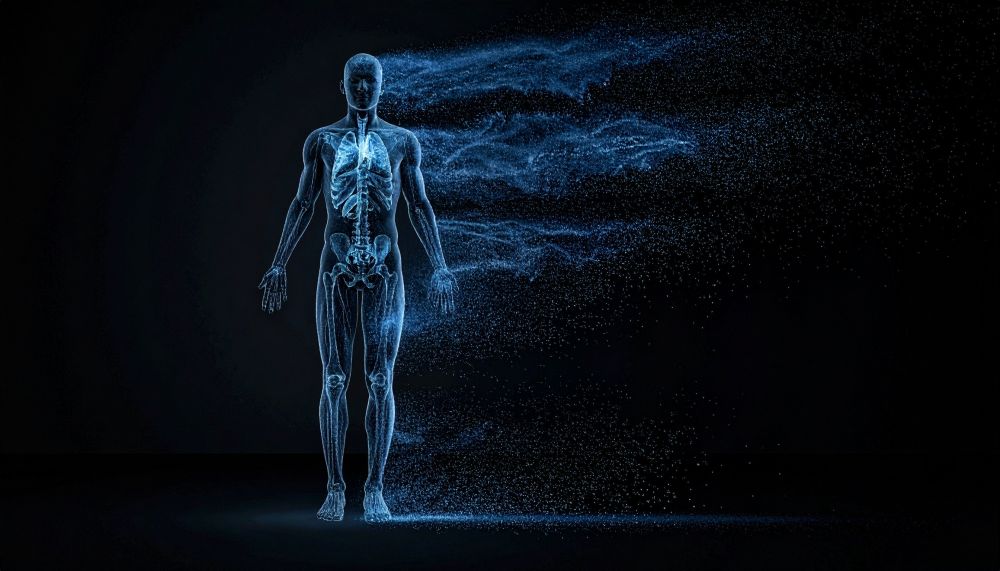
20/2026
There is quiet poetry in the idea that life glows.
For centuries, humans have spoken of a “light” in the eyes, a spark of vitality that distinguishes the living from the dead. Now, science suggests that this language, often dismissed as poetic exaggeration, may be closer to the literal truth than we ever imagined.
A Hard-to-See Glow with the Naked Eye
The phenomenon is called ultraweak photon emission or, more evocatively, biophotons. Every living organism, from plants to animals, emits tiny particles of light as a byproduct of its internal chemistry.
These photons arise from the restless activity within our cells. Life, at its core, is a vibrant storm of chemical reactions: oxygen is consumed, energy is produced, and molecules are built and broken apart. In this ceaseless motion, small amounts of energy escape not as heat alone, but as faint, almost magical flashes of light.
It is not the glow of fireflies or deep-sea creatures. It is far weaker, about a thousand times dimmer than what human eyes can see. In other words, life glows, but invisibly so.
The Experiment That Stopped the Light of Life
In a 2025 study, researchers used highly sensitive cameras to observe this glow in living mice and plants. What they found was as simple as it was profound: while the organisms were alive, the faint light persisted. After Death, it dropped sharply, almost as if someone had turned off a switch.
The difference was not just philosophical. It was measurable, quantifiable, and scientifically undeniable, reinforcing confidence in these new insights.
This glow depends on cellular machinery, especially mitochondria, which produce energy; when these structures stop, the photons disappear.
We tend to think of life as something solid, something that is. But biology insists otherwise. Life is not an object. It is a continuous process of reactions, exchanges, and transformations.
The faint light is not a decoration of life. It is a signature of that process.
When the process ends, nothing dramatic happens. No visible glow fades before our eyes. Instead, the microscopic fireworks inside our cells stop. The quiet chemistry that once produced light dissolves into stillness.
The body remains. The light does not.
Between Science and Meaning
It is tempting to cast this finding in mystical terms to speak of souls as light and of life as energy escaping into the universe. But the truth is both more modest and more profound.
This glow is not evidence of anything supernatural. It is a reminder that life, even in its most ordinary form, is astonishingly dynamic.
Every second, in every cell, countless reactions occur so many that they spill over into light itself. Not enough to illuminate a room, but enough to be detected in the deepest darkness with the right instruments.
We are, in a literal sense, beings of energy in motion.
A New Way to See Health
Beyond its philosophical pull, this discovery could inspire hope by offering a new way to monitor health. Changes in biophoton emission might reveal stress, disease, or damage early, empowering proactive care.
Imagine diagnosing illness not through invasive tests, but by observing the body’s own dim emissions, its quiet signals of distress.
In that sense, the glow is not just a curiosity. It may become a language.