Earth - an Integrated Living System of Four Spheres
Posted 5 months ago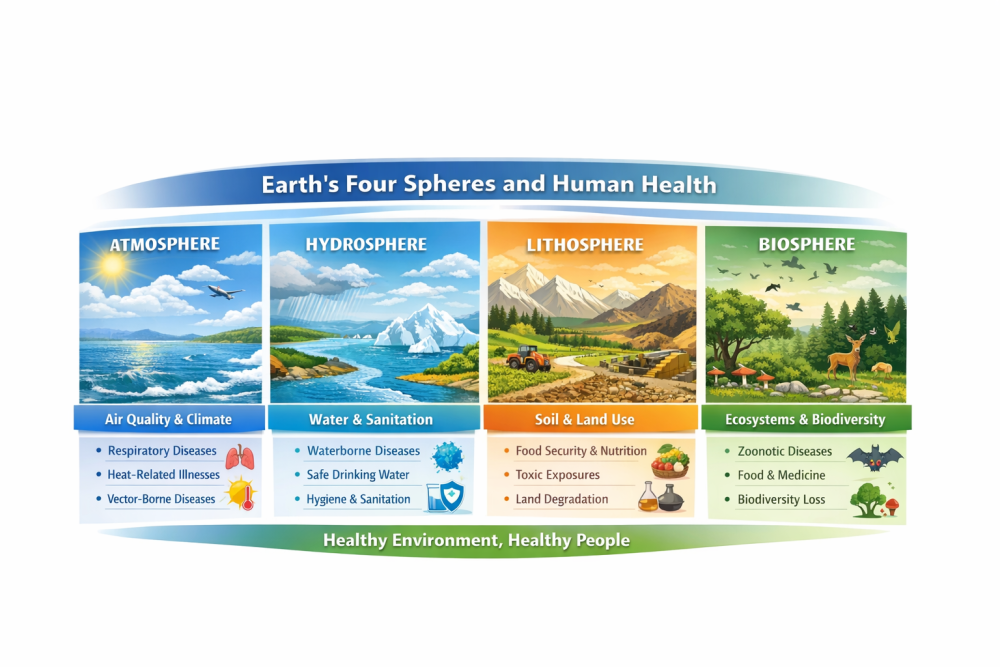
EH-3
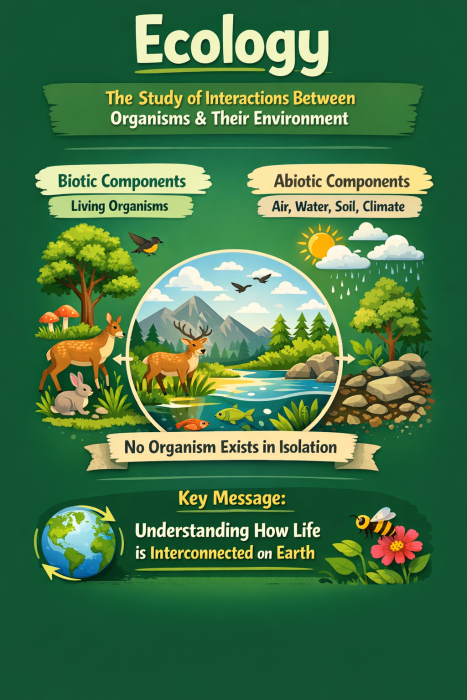
Earth isn’t just land; it’s a living system made up of four main spheres that work together to support life. These are the air around us (atmosphere), all the water on Earth (hydrosphere), the ground beneath our feet (lithosphere), and all living things, including us (biosphere). Together, these spheres shape our environment and help us understand how our planet works.
Modern scientific research identifies these spheres as the primary domains in which Earth’s processes operate. Understanding our influence on these spheres highlights the importance of responsible stewardship for a sustainable future.
This chapter presents a detailed examination of each of these four spheres, emphasizing their individual significance within the broader Earth system.
1.0 The Atmosphere
The atmosphere is the gaseous layer surrounding Earth, extending from the surface to the outer limits of space. It mainly consists of nitrogen (78%) and oxygen (21%), with small amounts of argon, carbon dioxide, and other gases.
1.1 Atmospheric Layers
The atmosphere is vertically structured into five primary layers:
• Troposphere
• Stratosphere
• Mesosphere
• Thermosphere
• Exosphere
Each layer exhibits distinct temperature gradients and physical properties, contributing to atmospheric dynamics.
1.2 Functional Significance
The atmosphere performs several critical functions:
• Provides oxygen for respiration and carbon dioxide for photosynthesis
• Regulates Earth’s temperature through radiative balance
• Protects life from harmful ultraviolet radiation via the ozone layer
• Enables weather systems and climate regulation
1.3 Contemporary Relevance
Recent scientific assessments reveal that atmospheric composition is changing noticeably due to increased greenhouse gas emissions. These shifts have significant implications for global climate patterns and environmental stability, highlighting the importance of atmospheric monitoring and management.
2.0 The Hydrosphere
The hydrosphere encompasses all water present on the Earth, including oceans, rivers, lakes, glaciers, groundwater, and atmospheric water vapor.
2.1 Distribution of Water
Approximately 71% of Earth’s surface is covered by water, with:
• 97% contained in oceans (saline water)
• 3% as freshwater, largely locked in glaciers and ice caps
2.2 Functional Importance
The hydrosphere is essential for:
• Sustaining all known forms of life
• Regulating global temperature through heat storage and transfer
• Supporting ecological and biological processes
• Facilitating chemical reactions necessary for life
2.3 Scientific and Environmental Significance
Recent research highlights increasing concerns about water scarcity, glacial retreat, and ocean acidification. These changes represent larger environmental shifts and underscore the vital need for sustainable water management.
3.0 The Lithosphere
The lithosphere is the solid outer layer of Earth, including the crust and the upper mantle. It is made up of rocks, minerals, and soil.
3.1 Structural Features
The lithosphere is divided into tectonic plates that move over the semi-fluid asthenosphere. This movement gives rise to geological phenomena such as earthquakes, volcanic activity, and mountain formation.
3.2 Functional Role
The lithosphere serves as:
• The physical foundation for terrestrial life and human infrastructure
• A reservoir of natural resources, including minerals and fossil fuels
• A source of essential nutrients for plant growth through soil systems
3.3 Current Challenges
Human activities such as deforestation, mining, and urban expansion are exerting pressure on the lithosphere. Soil degradation and land-use changes are increasingly recognized as major environmental concerns affecting agricultural productivity and ecological balance.
4.0 The Biosphere
The biosphere encompasses all living organisms and the environments they inhabit, including land, water, and air.
4.1 Major Components of the Biosphere
It comprises:
• Flora (plants)
• Fauna (animals)
• Microorganisms (bacteria, fungi, viruses)
4.2 Functional Importance
The biosphere is fundamental to:
• Sustaining life processes
• Driving ecological and evolutionary dynamics
• Maintaining biodiversity
• Supporting human health, food systems, and economies
4.3 Contemporary Perspective
Scientific evidence shows that biodiversity is declining at an unprecedented rate due to habitat loss, climate change, and human activities. This decline presents serious threats to ecosystem services and the planet's long-term stability.
Conclusion
The atmosphere, hydrosphere, lithosphere, and biosphere together define Earth as a structured and life-supporting planetary system. Each sphere's health is vital, and understanding them is essential for addressing environmental challenges and ensuring a sustainable future.
Understanding these four spheres individually is crucial for recognizing Earth's complexity and tackling modern environmental issues. Protecting them is key to maintaining the sustainability of life, including human civilization.