Can We Teach Old Cells in Humans to Be Young Again?
Posted 3 months ago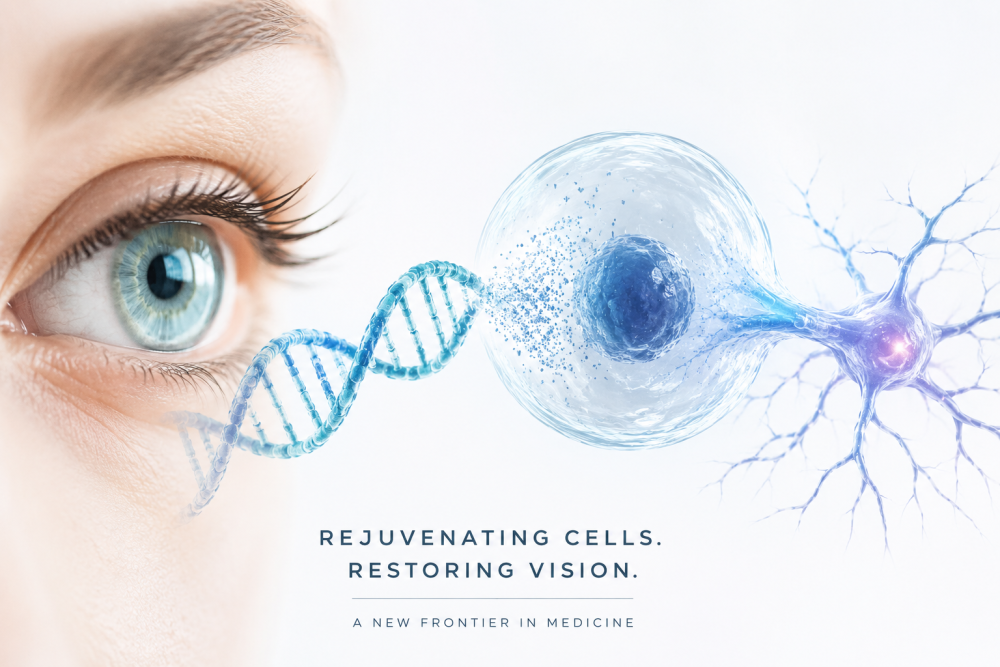
34/2026
An article in the world-class journal Nature is titled “World-first: therapy to make cells young again given to a person -The first participant has been treated in a landmark clinical trial of cellular reprogramming, which aims to rejuvenate ageing cells.”
For generations, scientists have sought ways to slow aging. Now, a bold new clinical trial is testing an even more ambitious idea: whether aging cells can be persuaded to behave like younger ones again.
The first participant has received experimental gene therapy to treat glaucoma, a leading cause of blindness. Rather than simply slowing the disease, the therapy aims to rejuvenate damaged nerve cells in the eye, so they behave like young, healthy cells.
The approach is grounded in a remarkable discovery in modern biology. Scientists have identified a small set of genes capable of resetting mature cells to a younger state. In this trial, researchers are using three of those genes to partially "reprogram" aging cells, restoring youthful functions while preserving the cells' normal identity.
In animal studies, this strategy helped damaged optic nerves regenerate and improved vision in older mice. If similar results occur in humans, it could open an entirely new approach to treating diseases linked to aging.
The eye is an ideal place to begin. Researchers can closely monitor the treatment, and any potential risks are more contained than in major organs such as the heart or liver. To add another layer of safety, the rejuvenation genes can be switched on and off with a common antibiotic, giving scientists precise control over the process.
No one claims this is a fountain of youth. The goal is not whole-body rejuvenation but the restoration of function in tissues damaged by aging and disease. Yet the implications are profound. If aging cells can safely regain youthful abilities, the same principle could one day help repair organs throughout the body.
Many hurdles remain, and success is far from guaranteed. But this first patient represents more than a clinical milestone. It marks the beginning of a new chapter in medicine, one in which aging itself may become a biological process that can be understood, managed, and perhaps partially reversed.
The age of cellular rejuvenation has not arrived yet. But for the first time, it has entered the clinic.
Disclaimer
The contents provided on www.biomedglobal.org are intended for general informational and educational purposes only. This website's information, articles, and resources are based on data and findings from scientific publications, publicly available research, and reputable sources.
While every effort is made to ensure accuracy and reliability, Biomed Global does not guarantee, endorse, or assume responsibility for the completeness, timeliness, or validity of the information.
The material on this website should not be considered a substitute for professional advice, diagnosis, or treatment. Users are strongly encouraged to consult qualified healthcare professionals, researchers, or subject-matter experts before making decisions based on the information presented here.
Under no circumstances shall Biomed Global, its affiliates, contributors, or authors be held liable for any direct, indirect, incidental, or consequential damages arising from the use of, or reliance on, the content of this website.
By accessing and using www.biomedglobal.org, you fully acknowledge and agree to this disclaimer.