An Experimental Pill Doubles Survival in Advanced Pancreatic Cancer
Posted 16 hours ago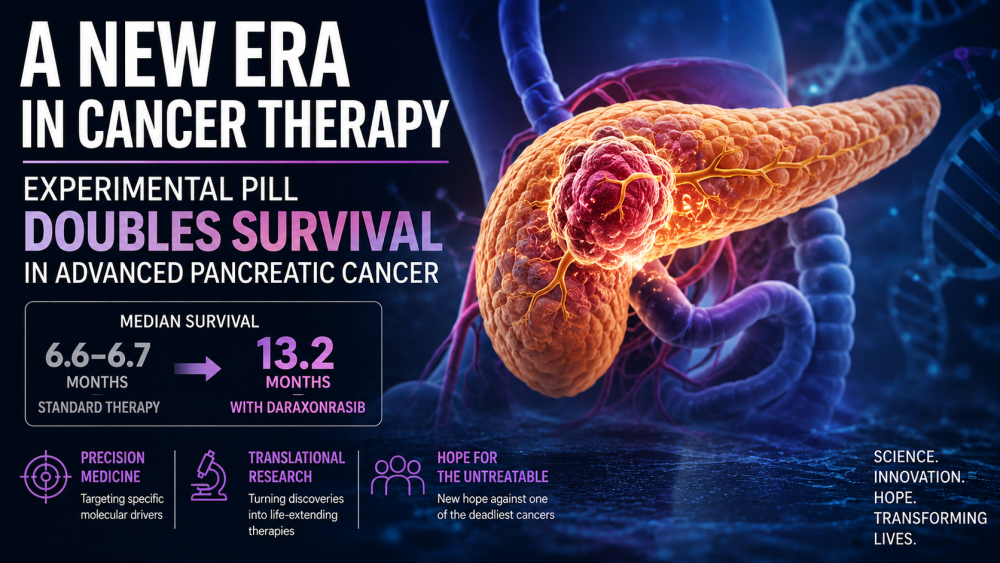
39/2026
An extraordinary development was presented at the 2026 meeting of the American Society of Clinical Oncology, particularly data from a study that many oncologists are calling one of the most significant advances in years for pancreatic cancer treatment.
A Pill That Doubles Survival in Advanced Pancreatic Cancer
Researchers reported that the experimental drug daraxonrasib nearly doubled median survival in patients with metastatic pancreatic cancer, increasing it from approximately 6.6–6.7 months to 13.2 months. The findings drew a standing ovation at the conference and were described by cancer experts as "landscape-changing" for one of the deadliest human malignancies.
Why this matters:
- Pancreatic cancer remains among the most lethal cancers worldwide.
- Therapeutic progress has been painfully slow for decades.
- The new targeted therapy offers not only longer survival but also fewer side effects than conventional chemotherapy.
This research embodies the three themes that define modern biomedicine:
- Precision Medicine – targeting specific molecular drivers of disease.
- Translational Research – converting laboratory discoveries into life-extending therapies.
- Hope for Previously Untreatable Diseases – demonstrating that even the most
Pancreatic cancer remains among the most lethal malignancies worldwide, accounting for hundreds of thousands of deaths each year. The disease is particularly dangerous because symptoms often remain silent until the disease reaches an advanced stage, making early diagnosis difficult and limiting treatment options.
The majority of pancreatic cancers arise from the pancreas’s exocrine cells, with pancreatic ductal adenocarcinoma (PDAC) the most common form. Risk factors include smoking, obesity, chronic pancreatitis, diabetes, advancing age, and a family history of the disease.
Despite remarkable progress in cancer research, pancreatic cancer has long been associated with poor survival rates. Conventional treatments, including surgery, chemotherapy, and radiation therapy, have provided only modest improvements in patient outcomes. Surgical removal of the tumor offers the best chance of cure, but only a small proportion of patients are diagnosed early enough to be eligible for surgery.
Recent advances in molecular biology, genomics, immunotherapy, and targeted therapies are beginning to change the landscape. Scientists are increasingly identifying genetic mutations and molecular pathways that drive tumor growth, paving the way for precision medicine approaches. Encouraging results from newly developed targeted drugs presented at international oncology conferences in 2026 have generated renewed hope that pancreatic cancer may finally become a more treatable disease.
Disclaimer
The contents provided on www.biomedglobal.org are intended for general informational and educational purposes only. This website's information, articles, and resources are based on data and findings from scientific publications, publicly available research, and reputable sources.
While every effort is made to ensure accuracy and reliability, Biomed Global does not guarantee, endorse, or assume responsibility for the completeness, timeliness, or validity of the information.
The material on this website should not be considered a substitute for professional advice, diagnosis, or treatment. Users are strongly encouraged to consult qualified healthcare professionals, researchers, or subject-matter experts before making decisions based on the information presented here.
Under no circumstances shall Biomed Global, its affiliates, contributors, or authors be held liable for any direct, indirect, incidental, or consequential damages arising from the use of, or reliance on, the content of this website.
By accessing and using www.biomedglobal.org, you fully acknowledge and agree to this disclaimer.