Stress Can Quietly Reduce Our Ability to Think Clearly
Posted 5 months ago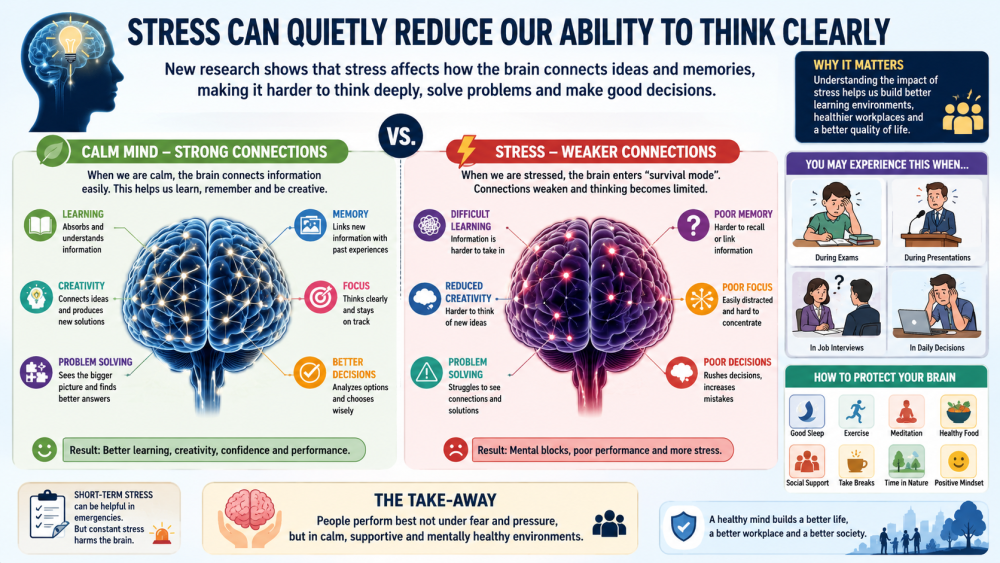
30/2026
Scientists have discovered that stress does more than make people feel worried or anxious; it can affect how the brain links ideas and memories. A recent study highlighted in Nature explains that when people are under stress, the brain shifts into “survival mode.” In this state, it becomes harder to think deeply, solve problems creatively, or connect different pieces of information.
This is why students sometimes “blank out” during exams, speakers forget key points during presentations, or people struggle to answer simple questions in interviews, even when they know the answers. Stress hormones such as cortisol and adrenaline prepare the body for quick reactions, but they also reduce the brain’s flexibility and calm reasoning.
In academic institutions, leadership decisions shape not only policies and administration but also the future of students, faculty, and society. Therefore, Vice Chancellors, Rectors, Registrars, Deans, and other members of the governance team must cultivate the ability to remain calm, emotionally balanced, and mentally focused, especially during periods of pressure and uncertainty. Scientific research now shows that stress weakens the brain’s ability to connect ideas, analyze situations wisely, and make sound judgments. By contrast, calm, composed leadership enhances strategic thinking, communication, creativity, and problem-solving. Academic leaders who cultivate patience, emotional intelligence, reflective thinking, and stress-management skills are better equipped to handle institutional challenges, resolve conflicts, inspire teams, and make decisions that promote academic excellence and organizational stability. In higher education, where thoughtful governance is essential, a calm mind is not merely a personal strength; it is a leadership necessity.
The findings are important for education, workplaces, and daily life. Chronic pressure and anxiety may impair learning, creativity, and decision-making. Experts suggest that healthy sleep, exercise, relaxation, supportive environments, and positive social interactions can help protect the brain from the harmful effects of stress.
The research reminds us that people perform best not under fear and pressure, but in calm, supportive, and mentally healthy environments.