Our Future, Our Choice: How to Protect Humanity from 17 Global Threats
Posted 1 day ago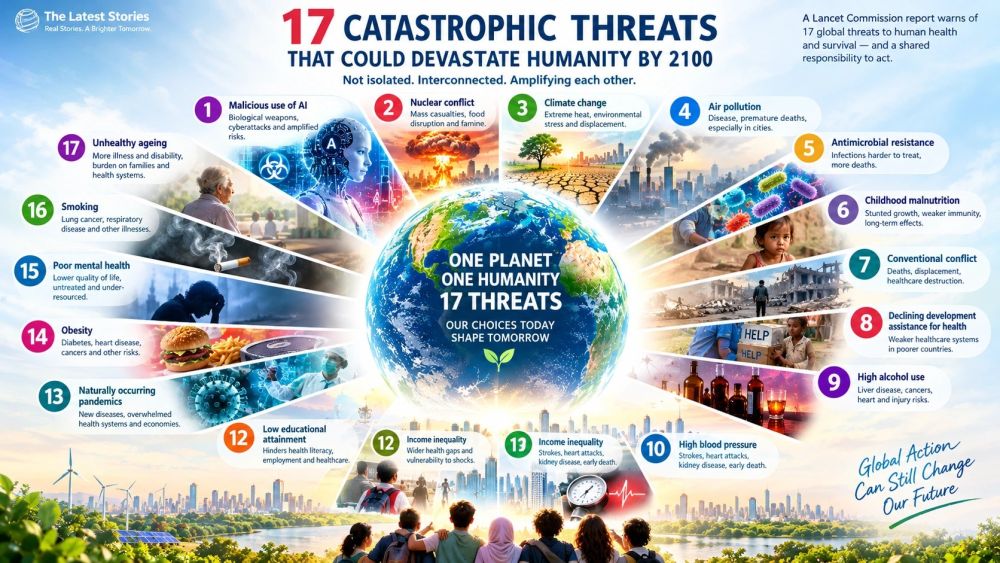
64/2026
Scientists warn that nuclear conflict and the malicious use of artificial intelligence could threaten human survival, yet coordinated global action can still change the future.
Humanity has made remarkable advances in medicine, science, and technology, yet some of its greatest inventions could also pose unprecedented dangers. A new assessment by the Lancet Commission on 21st Century Global Threats to Health warns that nuclear conflict and the deliberate misuse of artificial intelligence (AI) could pose existential risks to humanity before the end of this century.
The assessment, reported by The Guardian on October 11, 2026, identifies 17 major threats to human health and survival over the next 75 years. Its central message is not that human extinction is inevitable, but that today's decisions could determine the future of generations to come.
When Technology Becomes a Threat
Artificial intelligence is already transforming healthcare, education, scientific research, and industry. However, powerful technologies can become dangerous when used irresponsibly or deliberately weaponized.
One concern is that malicious actors could exploit AI tools to develop biological weapons. Such weapons could spread dangerous diseases and overwhelm healthcare systems. AI could also increase risks by helping attackers identify weaknesses in critical infrastructure or by accelerating the development of sophisticated cyberattacks.
These scenarios do not mean AI will inevitably destroy humanity. Rather, they underscore the importance of safeguards, responsible research, international cooperation, and effective oversight as AI capabilities advance.
The Lasting Consequences of Nuclear War
Nuclear weapons pose another major threat. Their immediate effects include massive explosions, intense heat, and radiation exposure. But the consequences could extend far beyond the areas directly attacked.
A large nuclear conflict could send vast quantities of smoke and soot into the atmosphere, reducing the sunlight reaching Earth's surface. Temperatures could fall, agricultural production could decline, and food supplies could collapse across countries far removed from the fighting.
This possibility, known as nuclear famine, illustrates that nuclear war is not merely a military or political issue. It is also a global public health emergency that could threaten billions of lives.
Seventeen Threats, One Connected World
The Lancet assessment also highlights climate change, childhood malnutrition, air pollution, antimicrobial resistance, declining international aid, and other threats to human health.
These challenges are interconnected. Climate-related disasters can damage food systems, and malnutrition weakens people's ability to withstand disease. Antimicrobial resistance makes infections harder to treat, and reduced international assistance can leave vulnerable communities without essential healthcare.
The assessment therefore encourages governments to look beyond individual crises and to strengthen the systems that protect human health and well-being.
Prevention Is Still Possible
The report offers an important message of hope: practical pathways exist to address all 17 threats. Governments can strengthen nuclear arms control, establish effective safeguards for advanced AI, improve disease surveillance, invest in resilient healthcare systems, and accelerate climate action.
Scientists, universities, technology companies, and international organizations also play important roles. Research institutions must promote responsible innovation, while policymakers must ensure technological progress serves society rather than exposing it to unnecessary risks.
Ultimately, the future is not predetermined. Scientific progress can help solve humanity's most difficult problems, but it must be paired with ethical responsibility, sound governance, and international cooperation.
According to Professor Emeritus Dr. Muhammad Mukhtar, Rector of the University of Southern Punjab, Multan, Pakistan, and the Editor-in-Chief of Biomedglobal, the Lancet Commission's warning calls for action before preventable dangers become irreversible disasters. Protecting humanity in the twenty-first century will require more than scientific breakthroughs: it will demand the collective wisdom to use those breakthroughs wisely.
Disclaimer
The contents provided on www.biomedglobal.org are intended for general informational and educational purposes only. This website's information, articles, and resources are based on data and findings from scientific publications, publicly available research, and reputable sources.
While every effort is made to ensure accuracy and reliability, Biomed Global does not guarantee, endorse, or assume responsibility for the completeness, timeliness, or validity of the information.
The material on this website should not be considered a substitute for professional advice, diagnosis, or treatment. Users are strongly encouraged to consult qualified healthcare professionals, researchers, or subject-matter experts before making decisions based on the information presented here.
Under no circumstances shall Biomed Global, its affiliates, contributors, or authors be held liable for any direct, indirect, incidental, or consequential damages arising from the use of, or reliance on, the content of this website.
By accessing and using www.biomedglobal.org, you fully acknowledge and agree to this disclaimer.