Auto-brewery Syndrome (ABS) – Get Drunk Without Drinking Alcohol
Posted 4 months ago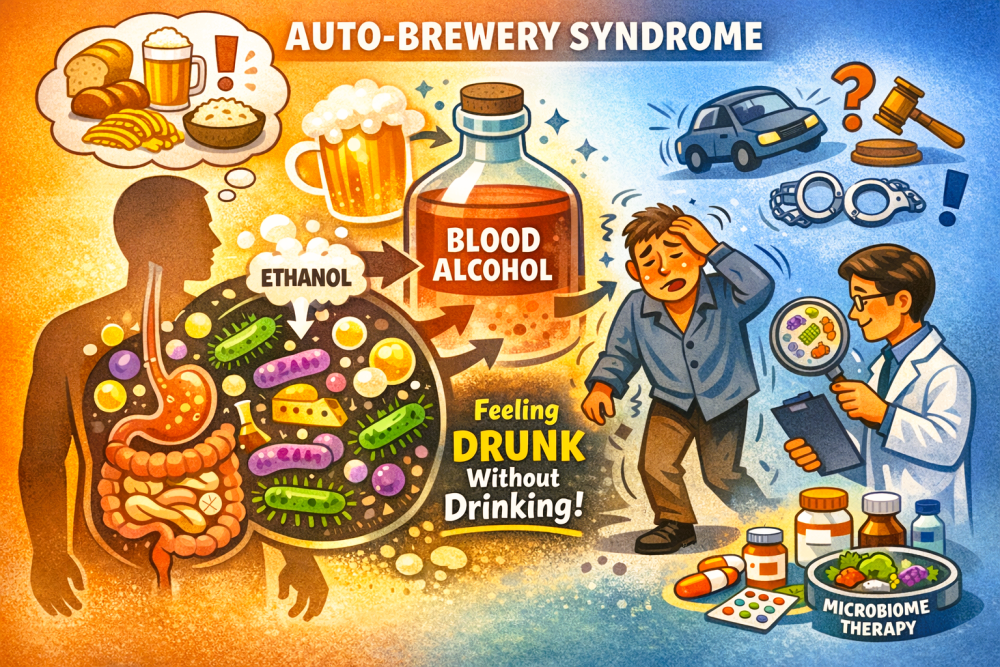
1/2026
Auto-brewery syndrome (ABS) is a rare metabolic disorder in which microorganisms ferment dietary carbohydrates into ethanol, resulting in increased alcohol levels in the blood and signs of intoxication without alcohol consumption. Recent advances have highlighted their microbial and metabolic mechanisms.
A large cohort study published in Nature Microbiology found that patients with ABS have a unique gut microbiome mainly composed of ethanol-producing Proteobacteria, particularly Escherichia coli and Klebsiella pneumoniae. Fecal samples from affected individuals produced significantly more ethanol outside the body compared to those from unaffected household controls, and the level of microbial fermentation genes correlated with blood alcohol levels in the body. These findings shift the understanding of ABS from being primarily caused by fungal overgrowth to a bacterial imbalance with heightened fermentative capacity.
Clinically, ABS presents as episodic intoxication, cognitive impairment, and motor dysfunction, often leading to misdiagnosis, social stigma, and legal issues. Diagnosis has traditionally depended on carbohydrate challenge tests with blood alcohol measurements, but recent evidence indicates that metagenomic and metabolomic stool profiling could allow for more accurate and accessible diagnosis.
Therapeutically, dietary carbohydrate restriction, targeted antimicrobial therapy, and microbiome modulation, including fecal microbiota transplantation in selected cases, show promise, supporting the idea that ABS is a potentially reversible, microbiome-driven disorder. Collectively, these studies establish ABS as a biologically based condition, emphasize the role of gut microbial metabolism in human physiology, and highlight the need for increased clinical recognition and standardized diagnostic and treatment approaches.
For centuries, doctors have told patients reporting intoxication without drinking: It isn’t possible. Yet, for a small number of individuals around the world, the reality has always been exactly that feeling drunk after a plate of pasta, a slice of bread, or a bowl of rice, with no alcohol consumed at all. Now, cutting-edge science has uncovered the microbiological roots of this puzzling experience, confirmed sufferers’ stories, and revealed a hidden frontier in human health.
ABS, also known as gut fermentation syndrome, is not just science fiction. It's a rare metabolic condition in which microorganisms in the gastrointestinal tract ferment carbohydrates into ethanol—the same type of alcohol found in beer, wine, and spirits—and this ethanol enters the bloodstream. The result: detectable blood alcohol levels and intoxication without consuming any alcohol.
For most people, small amounts of ethanol are a natural byproduct of microbial carbohydrate fermentation in the gut. However, in individuals with ABS, this process is significantly elevated. In the largest cohort study to date, published in Nature Microbiology and led by researchers at the University of California, San Diego, and Mass General Brigham, scientists analyzed fecal samples from 22 patients with ABS and 21 of their unaffected household partners. They found that during symptomatic flares, the patients’ stool samples produced notably more ethanol in culture than those of healthy controls.
What made this research especially revealing was the identification of specific bacterial culprits. While earlier case reports often implicated yeasts, this study found an enrichment of Proteobacteria, including Escherichia coli and Klebsiella pneumoniae, in patients’ guts. These microbes have metabolic pathways capable of producing ethanol at levels high enough to raise blood alcohol concentrations to ranges associated with clinical intoxication.
Beyond simple identification, the study also mapped the genes responsible for microbial fermentation pathways and linked their abundance to patients’ blood alcohol levels. Importantly, one patient experienced extended symptom relief after fecal microbiota transplantation, which highlights the potential of microbiome-modulating therapies for this condition.
The Human Toll of an Invisible Disorder
For people living with ABS, these findings have implications that go well beyond academic interest. The syndrome significantly impacts daily life. Patients often report slurred speech, poor coordination, dizziness, confusion, and other signs of intoxication even when they have not consumed alcohol. These physical effects are worsened by social stigma, misdiagnosis, and potential legal risks.
Consider the documented cases that have received public attention: a Belgian man once faced drunk-driving charges before medical testimony about ABS led to his acquittal; another person lost employment after repeated episodes of apparent intoxication that puzzled doctors and coworkers alike. These aren’t outliers; they are clear examples of how little ABS is understood so far, and how dangerous that lack of understanding can be.
People with ABS often endure years of diagnostic journeys, visiting many specialists and being dismissed as heavy drinkers, psychologically unstable, or malingering. Sometimes, they face psychiatric evaluations or harsh legal actions. Misdiagnosis isn't just a medical mistake; it’s a form of invalidating patients, stripping away their dignity and proper care.
From Mystery to Medicine: A New Scientific Framework
The significance of the new Nature Microbiology study lies not only in confirming the biological reality of ABS but also in providing new tools for detection and treatment. Traditional diagnostics for ABS have relied on lengthy monitored observation and repeated blood alcohol tests following carbohydrate load challenges. This method is labor-intensive and not widely accessible. The emerging approach that combines metagenomic sequencing with stool metabolomics could allow for quick, stool-based diagnostics and open the door to personalized microbiome therapies.
Furthermore, the success of procedures like fecal microbiota transplantation in at least one patient suggests that ABS is not an unchangeable condition but one that can potentially be reversed or, at the very least, managed through targeted microbiome interventions. This is a groundbreaking concept: a rare disease, once confined to case reports, is now becoming accessible with the same tools used to treat other microbiome-related disorders.
This challenges how clinicians, legal systems, and the public understand responsibility in cases of unexplained intoxication. As ABS moves from the medical fringe to scientific recognition, society must catch up, raising awareness among physicians, educating the public, and updating legal frameworks to reflect this condition’s biological basis.
Toward Recognition, Relief, and Respect
ABS may be rare, but for those it affects, it is very real. The new research marks a turning point: shifting from skepticism and stigma to evidence and empathy. It offers not just understanding but hope — hope for accurate diagnoses, hope for effective treatment, and, most importantly, hope for a world where patients are believed rather than dismissed when they say their bodies betray them.
By recognizing the microbiome as a genuine biological factor in auto-brewery syndrome, medicine moves closer to a more compassionate and accurate approach that acknowledges the complex microbial ecosystems within us and their essential role in shaping human health, behavior, and identity.